Modern Education Missing the Aim of Life
|
 Times
of India - Sep 9, 2006 -
HOUSTON:
Times
of India - Sep 9, 2006 -
HOUSTON: |
There are divisions of duties and divisions of social and spiritual order. That's all right. But how one can understand that by executing his duty, he's going to the path of perfection? Everyone should be confident that whatever he is doing, he's doing for the perfection of life. That should be the aim of. In the modern education system, not only education system, in every field of life, practically we do not know what is the ultimate goal of life. Na te viduh svartha-gatim hi vishnum durashaya ye bahir-artha-maninah [SB 7.5.31]. They do not know what is the goal of life. The goal of life is Vishnu, or the Supreme Lord, or God. That one has to understand what is the Supreme Lord, what is Absolute Truth, "What is my relationship with Him and what is my duty towards Him?" These things are to be known, and one has to adjust his life in that way. |
Ladies and gentlemen, boys and girls, I thank you very much for joining us in this evening of chanting together Hare Krishna. The sankirtan movement is a prescribed performance in this age. In the Srimad-Bhagavatam, Eleventh Canto, Ninth Chapter, 6th verse, there is a statement that,
krishna-varnam tvisha-krishnam
sangopangastra-parshadam
yajnair sankirtan-prayairyajanti hi su-medhasah [SB 11.5.32]
Su-medhasah,
this Sanskrit word, means intelligent
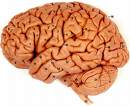
persons. Medhas. Medhas means brain substance, one who has got
very good brain substance. The brain substance... According to
psychology, there is difference of brain substance. Not the brain
substance equally, of equal weight, in every man's brain. You know, you
are all educated students, psychology students. In our boyhood when we
were a student in psychology class, Dr. Urquhart explained this brain
substance. The man has got the highest brain substance—not all—up to
sixty-four ounce. And woman has got the highest up to thirty-six or
thirty-four. Of course, we are not discussing that point. Our movement
is a spiritual movement, Krishna consciousness. That is beyond brain. Indriyani
parany ahur indriyebhyah param manah, manasas tu para buddhir [Bhagavad-gita
3.42]. So there are different platforms and status of consciousness.
Bodily consciousness means sensual consciousness. Above that, there is
mental consciousness, speculative, philosophical, poetic. Above that,
intellectual consciousness. And Krishna consciousness—above
intellectual consciousness.
So the recommendation is... That was a topic between Maharaja Nimi and
great sages called nine sages, navayogindra. Nava means nine. Yogindra
means mystic yogis. So they were talking, and Maharaja Nimi
questioned the different incarnations in different ages. And Chamasa
Muni was replying. In that replying, he said that in the Kali-yuga, in
this age... This age called Kali-yuga. This Kali-yuga has begun about
five thousand years ago. So he said, "In the Kali-yuga the process of
self-realization is sankirtan movement." Sankirtan.
Sankirtan means bahudha, bahubhir militva. When
congregational chanting is done, that is called sankirtan. So
in this age the sankirtan movement is recommended. There is no
question of what is your religion, what is my religion. Everyone can
join in this
sankirtan movement, without any discrimination. That is the
recommendation. Yajnair sankirtan. This is also
yajna, sacrifice. You are sacrificing some time, your valuable
time, in joining with us to perform the sankirtan movement.
That is a sacrifice. And sacrifice means to please the Supreme
Personality of Godhead. Yajna. Yajna is the name of the Supreme
Personality of Godhead. In the Bhagavad-gita it is said, yajnarthat
karma anyatra karma-bandhanah. Whatever you have to act, you
have to act on the basis of pleasing the Supreme Lord.
In the Srimad-Bhagavat there is another verse, that,
atah pumbhir dvija-shreshtha
varnashrama-vibhagashah
svanushthitasya dharmasya
samsiddhir hari-toshanam [SB 1.2.13]
Sri
Suta Gosvami is addressing the learned sages assembled in
a place called Naimisharanya. That place is still existing in India, in
northern India. It is very old place. Now the place is named Nimsar,
but original name is Naimisharanya. So in that Naimisharanya meeting,
the president, Suta Gosvami, addressed the brahmanas. He said, atah
pumbhir dvija-
shreshtha. Dvija-shreshtha means in that assembly the
high-class brahmanas, very intelligent class of men, they
assembled. So he addressed them, "My dear learned scholars, brahmanas,
the duty of the human society,"
atah pumbhir dvija-shreshtha varnashrama-vibhagashah... The
duties are different according to different divisions of social order
and spiritual order. That is Vedic civilization. There are four kinds
of social orders and four kinds of spiritual orders. The social orders
are the brahmanas, the kshatriyas, the vaishyas,
and the
shudras. Or the intellectual class of men... Brahmana means
intellectual class of men—one who devotes his life only in studying Vedas
and acquiring knowledge and distributing that. Every time, in every
age, there is a class of men who are intellectual class. So this
intellectual class of men is called brahmana. And the next
class, the administrative class. Those who takes part in politics for
administration of the state, government, they are called kshatriyas.
The actual meaning of kshatriya is "one who protects a man from
being hurt by others." That is called kshatriya. That means,
that is the business of the administrators, government. So brahmana,
kshatriya, then vaishyas. Vaishyas means productive
class who are interested in producing things for consumption by the
people. Mercantile class, industrialists, they are called vaishyas.
And the last class, fourth class, they are called shudras. Shudras
means that they are neither intellectual, nor they're administrator,
nor industrial or mercantile, but they can serve others. That's all.
So it is said that kalau shudra sambhava. In the modern
age, people are being taught in the university to become shudra—neither
brahmanas nor kshatriyas nor vaishyas,
generally. Because after education, they will have to seek after some
service. He becomes a great technologist, but unless he gets a good
job, his whole education is spoiled. You see? So therefore, in the
Vedic shastra it is said, in this age people are almost all shudras.
Kalau shudra sambhava. So the president of that
meeting, Suta Gosvami, said that it doesn't matter whether one man is brahmana
or a kshatriya or a vaishya or a shudra. This
is social order. And then spiritual order: brahmachari, grihastha,
vanaprastha, and sannyasa. Brahmachari means student,
unmarried student, without any sex life. That is brahmachari.
And then grihastha, householder. Those who are living with wife
and children, they are called householder, grihastha. Then vanaprastha,
the retired persons. And then sannyasa. After retirement, one
dedicates his whole life for preaching work, preaching Krishna
consciousness. That is sannyasa order. So this is... These four
divisions are in the spiritual order, and the other divisions are in
the social order. Human society without these eight divisions—means
social divisions and spiritual divisions—it is not called civilized.
They must have. Therefore Suta Gosvami said, the social orders are
there, and the spiritual orders are there, and each and every order,
there are prescribed duties. The brahmanas, they are engaged in
such and such things, the brahmacharis are engaged in such and
such thing, the kshatriyas are engaged... There are different
prescribed duties. Now Suta Gosvami says that varnashrama-vibhagashah.
There are divisions of duties and divisions of social and spiritual
order. That's all right. But how one can understand that by executing
his duty, he's going to the path of perfection? Everyone should be
confident that whatever he is doing, he's doing for the perfection of
life. That should be the aim of. In the modern education system, not
only education system, in every field of life, practically we do not
know what is the ultimate goal of life. Na te viduh
svartha-gatim hi vishnum durashaya ye bahir-artha-maninah [SB
7.5.31]. They do not know what is the goal of life. The goal of life is
Vishnu, or the Supreme Lord, or God. That one has to understand what is
the Supreme Lord, what is Absolute Truth, "What is my relationship with
Him and what is my duty towards Him?" These things are to be known, and
one has to adjust his life in that way. So Suta Gosvami says, never
mind in whatever order one may be situated, the perfection is samsiddhir
hari-toshanam [SB 1.2.13]. Atah varnashrama-vibhagashah
dvija-shreshtha svanushthitasya dharmasya. One should try to
test, "How my duties are being perfectly done?" That one has to see.
So that perfection is recommended, hari-toshanam: whether by
your duty, by your action, the Supreme Lord is satisfied. Just like we
want to satisfy... In the schools, colleges, we want to satisfy our
professor, teachers, principal. Or as good citizen we want to satisfy
our government or... Similarly, you have to satisfy somebody. That is
the perfection. The highest perfection is to satisfy hari-toshanam.
Hari means the Supreme Lord, and toshanam means
satisfaction. Whether by your work and duties, discharging your duty,
the Supreme Lord is satisfied—that is your perfection. But this is very
rare thing. At the present moment practically nobody has any
information what is his relationship with God or what is God.
Practically, they are declaring "God is dead," and "I am God, you are
God, everyone is God." These things are all... "There is void." "There
is no God," "There is no control." So, so many things are going on.
That is the disease of this present age. And this movement is
practically against this idea of godlessness, this Krishna
consciousness movement. The whole idea of this Krishna consciousness
movement is to fight against the idea of godlessness. So the Bhagavad-gita
is there. We are fighting in two ways. One way is that this chanting,
Hare Krishna. Very simple thing. Everyone can join: Hare Krishna, Hare
Krishna, Krishna Krishna, Hare Hare/ Hare Rama, Hare Rama, Rama Rama,
Hare Hare. By chanting this movement, by the vibration, gradually one's
heart, which is so contaminated that he is denying the existence of
God, will be gradually simplified or clarified. Cheto-darpana-marjanam
[Chaitanya-charitamrita Antya 20.12]. Just like the
mirror, when it is overcast with dust, you cannot see your face nicely.
But if you clear the dust you can see clearly. Similarly, our, this
disease, denial of God, or "God is dead," "There is no God," "I am
God," "You are God," such kinds of conception is due to covering of
material dust on the mirror of our heart. Cheto-darpana-marjanam.
If you simply chant this transcendental vibration,
Hare Krishna, Hare Krishna, Krishna Krishna, Hare Hare/ Hare Rama, Hare
Rama, Rama Rama, Hare Hare, you don't require any qualification and you
don't require that you have to become intellectual man or an
administrator or a productive man or... Never mind whatever you are.
You be situated in your place, but you try to chant this Hare Krishna,
Hare Krishna, Krishna Krishna, Hare Hare. The result will be that your
heart, the dust on the mirror of your heart, will be gradually
cleansed. And when it is completely cleansed, then you will understand
that you are not this body. Cheto-darpana-marjanam
bhava-maha-davagni-nirvapanam [Cc. Antya 20.12].
All the problems of our life, whatever you may say, social, political,
religious and whatever... There are so many problems. The whole
material world is full of problems. These problems are compared just
like blazing fire in the forest. Just like in the forest, there is
fire, nobody can check. Although nobody goes to the forest to set fire,
it takes automatically. Similarly, in this material existence of life,
we do not want any problem, but problems are created. Just like
automatically there is fire in the forest without our endeavor,
similarly, material problems are created automatically by our dealings,
by our behavior. So if you chant this Hare Krishna mantra, the
first result will be that you will understand your real constitutional
position, for which many great mystics, sages and saints are
meditating, "What I am?" That, I mean to say, procedure of spiritual
realization will be the first installment, your profit. You'll
understand that aham brahmasmi, "I am not matter, I am
spirit soul." And as it is stated in the Bhagavad-gita,
as soon as one is self-realized, that is called brahma-bhutah. Aham
brahmasmi: "I am not this body, I am spirit soul. I am part and
parcel of the Absolute Truth." This realization is called Brahman
realization. And as soon as you come to the platform of Brahman
realization, then the result will be brahma-bhutah prasannatma
[Bg. 18.54]. You'll be joyful. You'll be free of all anxieties. Brahma-bhutah
prasannatma. That is the sign. It is not that simply... I may
advertise that I am self-realized, but my behavior will show whether I
am self-realized or not. Everything is stated in the Vedic literature,
that a brahma-bhutah person, a self-realized person, the
symptom of the self-realized person is that he is joyful. Brahma-bhutah
prasannatma [Bg. 18.54]. Without any anxieties. This
materialistic life means full of anxiety always. And spiritual life
means without this anxiety. Just the opposite. Brahma-bhutah
prasannatma. And what is the symptom of being joyful? That is
also stated: na shochati na kankshati. There is no
lamentation for loss, and there is no hankering for gain. Everyone in
this material world is hankering after some gain. And if you have got
some gain, if it is lost, then he's lamenting, "Oh, I have lost so
much." So these two business... Hankering, when we do not possess, we
hanker. And when we possess, it is lost. Because everything... The
material waves are such that whatever we possess, we shall lose it. We
have got this nice body, one day we have to lose it. Everything. You
possess and lose, possess and lose. Therefore the..., punah punash
char..., the same thing repeatedly: gaining and losing, and
lamenting and hankering, lamenting and hankering. This is the position
of material life.
So in the Bhagavad-gita it is said that brahma-bhutah
prasannatma na shochati na kankshati [Bg. 18.54]. As soon as you
come to that platform, prasanna, joyfulness, then samah
sarveshu bhuteshu. The next stage is that you look everyone on the
same level. There is no distinction between black and white or the
Indian or American or Russian or this and that. No. Panditah
sama-darshinah [Bg. 5.18]. One who is actually learned, he sees
everyone on the same level of spiritual understanding. So brahma-bhutah
prasannatma na shochati na kankshati samah sarveshu bhuteshu.
This is the stage of acquiring Krishna consciousness.
brahma-bhutah prasannatma
na shochati na kankshati
samah sarveshu bhuteshu
mad-bhaktim labhate param [Bg. 18.54]
Then
he comes to the standard of Krishna consciousness, or
platform of Krishna consciousness, when he can begin his duties in
transcendental lovings towards the Absolute Truth. And when we begin
that activity, that spiritual activity, then we can understand, bhaktya
mam abhijanati [Bg. 18.55], what is God. These are the stages.
We cannot understand by speculative method. God is unlimited, and we
are very limited. Our knowledge is limited because our senses, the
instruments by which we acquire knowledge, that is imperfect and
limited. Just like my eyes. I cannot see perfectly. I cannot see the
eyelid. I cannot see the distant place. Although I am very proud that
"I want to see face to face," but what you can see? What is your value
of your instrument, seeing? That is imperfect. Therefore we cannot get
perfect knowledge by these imperfect senses. By sense perception, by
direct utilization of our senses, we cannot get perfect knowledge. The
perfect knowledge you can get when your senses have been purified to
the perfect order. Then you can see.
So that stage is Brahma-bhutah prasannatma [Bg. 18.54].
When you are on the brahma-bhutah, or spiritual,
self-realization platform, then your senses are purified and you can
see things in two perspectives. And at that stage, you can see God
also. You can talk with God also. Just like in the Brahma-samhita
it is stated, premanjana
-cchurita-bhakti-vilochanena santah sadaiva hridayeshu vilokayanti
[Brahma-samhita 5.38]. You have... Most of you know the yoga.
The yoga system means to see the Supreme Person, or the
Absolute Truth, or the Personality of Godhead, Vishnu, within your
heart. That is the perfection of yoga. Dhyanavasthita-tad-gatena
manasa pashyanti yam... Dhyanavasthita, by meditation,
one can see. So this perfectional stage can be achieved when you are in
the brahma-bhutah stage, Brahman realization stage. So Lord
Chaitanya said that if you chant this Hare Krishna mantra, the
first installment of your gain will be that your heart, which is
contaminated now with so many materialistic dust, it will be cleansed.
And next stage will be bhava-maha-davagni-nirvapanam.
That means you'll realize yourself that "I am not this matter, I am
soul. And my relationship with God is this. God is like this." And
gradually, you will develop your love for God. You have got that love.
Dormant love is there, but because we do not know what is God, because
we do not see the beauty of God, because we do not know the mercy of
God, therefore our love has been forced or placed in the dog. Instead
of God, we have placed our love on dog. So we have to simply change.
Our love is distributed in the matter in so many ways. That will not
make me happy because I am not matter. I am a spirit soul. I have to
transfer my love towards the Supreme Spirit, God, then I'll be happy.
So this Krishna consciousness movement is a process by which you can
transform your love from matter to God. That's all. You have got love
but you are being frustrated. You are being frustrated. You are being
baffled. Your love is not placed in the proper place. Therefore we have
to make our choice, "Where I shall place my love?" Then I'll be
satisfied. That is replied in the Srimad-Bhagavatam,
sa vai pumsam paro dharmo
yato bhaktiradhokshaje
ahaituky apratihata
yayatma suprasidati [SB 1.2.6]
Atma,
self. Everyone is seeking after peacefulness,
peacefulness of atma, or self. So this is the process
recommended. Not recommended, it is the fact, that sa vai pumsam
paro dharmo [SB 1.2.6]. In whatever occupation you are situated,
doesn't matter. You have to see simply whether by your occupation the
Supreme Lord is satisfied, or your love for the Supreme Lord is
increasing. That is the test of perfection. And when your love is
increased in that way,
adhokshaje ahaituki—ahaituki means without any cause,
without any reason, and apratihata, without any impediment—then
you'll see yayatma suprasidati. Your atma is fully
satisfied. Svamin kritartho 'smi. "My dear Lord, I am now
fully satisfied. I have no more any demand." The material world,
material life, means simply demands, increasing the demands. That is
the modern way of life, increasing artificial demand and being
frustrated. That is our life. But if you want satisfaction, not
frustration, not bafflement, then increase your love for God. And the
process is very simple, recommended in this age. You haven't got to
perform any severe austerity, penance, or you have got to go to the
forest or Himalayan mountain or you have to do this, that. Nothing. You
be situated in your place, whatever you may be. But if you simply chant
this mantra, Hare Krishna, Hare Krishna, Krishna Krishna, Hare
Hare/ Hare Rama, Hare Rama, Rama Rama, Hare Hare, you will gradually
develop.
Your first, the first installment will be that your heart will be
cleansed of all material contamination. Then you'll be situated on the brahma-bhutah
stage. Oh, prasannatma! Oh, joyfulness! Without being joyful,
you cannot understand what is God. If your mind is disturbed always,
you cannot meditate, neither you can understand what is God, what you
are. It is impossible. Therefore we have to accept any process which
can make me joyful. That is stated in the
Srimad-Bhagavatam. We have got... Simply we are not chanting by
sentiment. We have got enough literature, philosophy, background. It is
not that we are sentimentalist. But this is a fact, that if you
simply... You do not require to read all this literature. If you can,
it is very good, but if you have no time, simply chant these sixteen
words, Hare Krishna, Hare Krishna, Krishna Krishna, Hare Hare/ Hare
Rama, Hare Rama, Rama Rama, Hare Hare. Make an experiment. We are not
charging anything. We are not cheating you, that "Give me some fifty
dollars or twenty dollars. I'll give you some secret
mantra." No. It is open. You can take. Everyone can take. Everyone.
We are chanting. You can chant with us and practice it, and there is no
hard and fast rules and regulation. You can chant anyway, anywhere.
Whether you are in the college, whether you're on the street, whether
you are sleeping, lying, or whatever, you can chant. Because God has
given you this tongue and you can chant. And this Hare Krishna mantra,
a dog or cat cannot chant although he has got the tongue. So you have
got the facility. By God's mercy you have got this facility to chant
the holy name of God. If you think that Krishna is Indian God's name,
actually it is not Indian God's name. Krishna never claims that He's
Indian or Hindu. Most of you have read Bhagavad-gita. He
claims everyone as His son. Not only human society—the animal society,
bird society, the beast society, the plant society, the aquatic
society, all. Sarva-yonishu. Sarva means all. Yoni, yoni
means species of life. Everyone, all living entities, Krishna says.
Krishna must be... If He is God, He must claim that, that "The material
nature is their mother and I am their father." So Krishna is for
everyone. Not that... Don't think that Krishna is for the Indian or for
the Hindus. No. Hare Krishna, Hare Krishna. This Krishna is for
everyone. For the human being, for the animals—everyone. So if you
think that Krishna is belonging to some particular country or religion,
then you can chant your own way. If in your religion, in your
scripture, there is any God's name, you can chant that also. Our only
propaganda is that you increase your love of God. And the simple
process is to chant this Hare Krishna, Hare Krishna, Krishna Krishna,
Hare Hare/ Hare Rama, Hare Rama, Rama Rama, Hare Hare. There is no
charge for it. There is no loss on your part. There is no inconvenience
on your part. At any moment, at any place. There is no restriction. So
why don't you take advantage of this great boon to the human society?
So this Krishna consciousness movement is not any sectarian movement.
It is practically postgraduate movement of all religion. Any religion,
they have got some idea of God. But here, we are explaining what is
God, how great He is, how you can establish your relationship with Him.
These things are there. So any religious person, or any person, without
being religious, if anyone joins with us in this sankirtan
movement, his life will be sublime. And our method is very simple. We
place before you to judge and join with us. That is our request.
Thank you very much. Any question? Yes?
Student (1): Apparently,
there are two parts to this. The first, the kirtan singing and
dancing, to some extent resembles the rock music that appears in the
Western world within the last five years. Very notably the Beatles song
last year, "Hey Jude," in the second part, is very similar in tune to
this. The second, which is quite remote, but there is a connection—your
message is similar in some ways to the message of evangelical or
fundamentalist teachers in Christianity, who are taking the name of
Jesus Christ...
Prabhupada: That's all right.
Student (1): ...and excluding
everything other than complete devotion to Christ. Would you comment on
this?
Prabhupada: Yes. That's very
nice. We completely agree. We say that chant the holy name of God. The
vibration, the sound which you chant, that must be the holy name of
God. Then it is all right. It doesn't matter what is the language.
Language has nothing, no significance. But this word "Krishna," we
consider it is transcendental vibration because all great saints and acharyas,
they chanted, especially Lord Chaitanya. As I explained from Srimad-Bhagavatam,
krishna-varnam tvishakrishnam [SB 11.5.32]. Krishna
varna, Krishna varnayati. Lord Chaitanya was always chanting,
"Krishna, Krishna, Krishna, Krishna, Krishna, Krishna." Therefore He is
called Krishna varnayati, Krishna-varnam. Tvishakrishnam:
by complexion He's not black. Krishna was blackish, but Lord Chaitanya,
He was golden colored. So Krishna-varnam tvishakrishnam
sangopangastra-
parshadam: always associated by followers. Yajnair sankirtan,
chanting and dancing with Krishna's name.
Yajanti hi su-medhasah: this form of the Lord should be
worshiped by persons who are intelligent. So if you follow the method,
evangelist, that is also very nice, or this method... The business
should be that we must realize in this human form of life what is our
relationship with God. If we fail to do that, then we are misusing this
human form of life.
In the Garga Upanishad it is said, etad viditva ya
prayati sa brahmana. Etad aviditva ya prayati sa kripana. Brahmana,
brahmana means broadminded, liberal. So one who... Everyone will
die. The cats and dogs and human being, everyone will die. But the Garga
Upanishad says that if one dies after understanding the science
of God, then he is perfect. He is brahmana. His life is
broader, mahatma. And if one dies without understanding this,
he is kripana. Kripana means miser. Miser means... Suppose if
you have got millions of dollars. If you cannot utilize it, if you
simply waste it, then you are kripana, miser. You do not know
how to spend money. Similarly, we have got this body which is worth...,
not millions-trillions and more than that, because we can realize in
this life what is our relationship with God, what is God. We can
understand. But if we don't do that, simply we waste our time in sense
gratification, then we are kripana, miser. We are losing our
opportunity. So these things are there. So in whatever way you like,
either this evangelistic way or this way or that way, try to understand
what is God and what is your relationship with God and try to invoke
your dormant love of God. Then your life will be perfect. That is our
mission. If you have got your own method, that's all right. You take
it. Otherwise we are giving this method, very simple. You take it. Your
life will be sublime. That is our request. Yes?
Student (2): ...question you
stated. If [we devote] time trying to figure out our relationship to
God, perhaps that takes time away from trying to figure out our
relationship with all men. And I think I would anticipate your answer,
I think, upon the... You're talking about atma, and if one
clearly has perception of the reality of their own atma, he
would also see others as himself. Right? And to know his self and his
God through others. But that doesn't really answer. It doesn't mean
we'll be able to decrease that condition. A lot of people suffer in
this world, and they suffer for pretty indefiable[?] reasons: economic
exploitation, racists trying to put structures, militaristic powers.
And it seems somehow we might be able to do something to attack those
kinds of evils and suffering in the world, other than telling a man to
chant Hare Krishna and the world will be solved.
Prabhupada: That is
automatically solved. If you chant, if you come to this God
consciousness, those things will be automatically solved. Just like if
you get million dollars, then your fifty dollars' business will be
automatically solved.
Student (2): Yeah, I guess
that you could believe that.
Prabhupada: Not believe. Is
practical.
Student (2): And I think the
reason I don't believe that is because history has told me differently.
History has told me that people who have managed to achieve freedom for
themselves have not achieved it by doing something like chanting Hare
Krishna. And I refer you to...
Prabhupada: You can show in
the history there was chanting of Hare Krishna? Is there any history?
Student (2): I won't say
chanting only Hare Krishna, but give you a similar time and place.
Prabhupada: What is that
similar time?
Student (2): Well, in Russia,
in the nineteenth century, there were people who were religious, who
traveled the countryside chanting the word "Jesus Christ." It was quite
prominent then. Tolstoy tells us about it. And I would assume that a
similar kind of teaching was given. The only problem I see with that is
that I don't think it would solve the very basic human problems.
Prabhupada: So do you think
that Russia has solved their questions? That their problems, all
problems are solved?
Student (2): I would say that
in 1917 the state of the Russian peasants was fundamentally better by
the revolution.
Prabhupada: Well, the history
will repeat itself again. It will be wars again. So do you think by
adopting the Russian method, people have become very happy?
Student (2): No.
Prabhupada: Then? So we
manufacture something. This material world is like that, problematic.
That I have already explained. Just like the blazing fire. So the
answer is given in the Bhagavad-gita , daivi hy
esha gunamayi mama duratyaya [Bg.
7.14]. In this material world the onslaught of the material nature is
very, very severe. Nobody can surpass it. In some way or other it will
come in a different form. The problem will not be solved. The problem
can be solved, as it is stated in the Bhagavad-gita, mam
eva ye prapadyante mayam etam taranti te, when one surrenders
unto God, Krishna. Then he can surpass this onslaught of material
nature. So that is the real remedy. Unfortunately, people does not take
that process. But if anyone accepts this process, his problems are
solved. That is the fact. That is the fact. But we do not expect that
everyone can accept this process. But if anyone can accept this
process, at least his personal problems will be solved. But it is the
duty of such God conscious persons to distribute the message. If anyone
likes, he can take, he can solve his problems. And if he does not take,
that business is the own business. What can I do? But any material
method, either this Russian method or American method or Indian method,
anything, materialistic method, that cannot solve the material
problems. That is a fact. If you want to solve all the problems, then
you have to invoke your dormant love for God. That is the solution.
There is no other solution. Yes.
Student (3): I was wondering
how important the choice of words are to the chanting. And if, perhaps,
if you just count to ten in your mind or out loud, I thought it might
work just as well.
Satsvarupa:"Could you just
count numbers and think about God and that would work just as well? Are
the names important?"
Prabhupada: Count words?
Satsvarupa:Could you just
count—one, two, three, four—and that would work just as well.
Prabhupada: Well, that is not
possible, of course, but as soon as stop counting, you can chant.
[laughter] That's not difficult. Yes?
Student (4): What is
consciousness?
Prabhupada: Consciousness is
very difficult to understand? Now you are talking, and when you don't
talk, you lie down. People will say this man has become unconscious. So
this is the distinction. When you are in full knowledge of things, that
is consciousness. It is not difficult to understand. Sometimes teachers
say to the student, "Do it conscientiously, with attention." When our
full attention is there, full absorption, full concentration of the
mind, that is consciousness. And another way of consciousness is the
feeling which is spread all over your body. Just like I pinch over your
head or any part of your body, you feel—that is consciousness. But when
this body is dead or when you are out of this body, if I chop up your
body, there is no consciousness. That is the distinction between
consciousness. Avinashi tu tad viddhi yena sarvam idam tatam.
In the Bhagavad-gita the consciousness is stated: avinashi.
Avinashi means cannot, never dies. Always living. Avinashi
tu tad viddhi. You just try to understand that thing without
always living. What is that? Yena sarvam idam tatam—by
which your whole body is spread by air[?]. And anywhere of your body,
that consciousness is spread. And that substance, consciousness, is
always living. When you leave this body this consciousness goes to
another body. Just like the air passes, the flavor the air carries from
one garden to another place. Similarly, this consciousness will carry
you to another body after your death. After you leave this body... Just
like we are changing our consciousness also from childhood
consciousness to boyhood, boyhood to youthhood, and the old age. The
consciousness is carrying me although the body is changing. Similarly,
when you change this body, the consciousness will carry you to another
body. That consciousness is always living. It is never dead. [break]
Because they don't take it.
Student (5): Then why are we
born without feeling.[?]
Prabhupada: That's your
independence. If you like you can take it. If you don't like, you don't
take it. There are so many things. If you like, you take it; if you
don't like, you don't take it. There is no enforcement. Every
individual soul has got little independence. Not full independence.
That can be used properly; that can be misused also. That depends on
me. I am the master. So similarly... Just like the government. The
government does not force anybody to go to the criminal department,
neither government forces anybody to come to the university department.
It is your individual liberty. You become criminal or a high standard
scholar. [break] ...has to make his choice. He has got the freedom. He
may be Krishna conscious or he may be material conscious. If he's
material conscious, he'll never be happy. If he becomes Krishna
conscious, he'll be always happy. Now it is up to you whether to accept
this or that.
Student (6): How would you
say the chant in English?
Prabhupada: Chant in English?
Student (6): Yes. How would
you say it in English?
Devotee: He wants a
translation in English.
Prabhupada: So there are many
boys. You can have the translation. We have got our translation in many
literatures. In our paper, Back to Godhead, in many
books. We have got many books. So translation is there. We are simply
publishing so many English translation. So there is no scarcity of
translation. Yes?
Student (7): Are you happy
always in reflection?[?]
Prabhupada: What do you
think? What do you think? I'm happy or not happy? What is your opinion?
And if I say false, why do you believe? If I say falsely, "I am happy,"
will you believe it? If I say falsely, "I am happy," will you take it?
Student (7): That I don't
know.
Prabhupada: Yes?
Student (6): If I can
rephrase that, if you were American, how would you say the chant? In
other words, I know it has many translations, but what would it mean to
you? How would you say it in English?
Prabhupada: English, the
translation... What is that?
Jadurani: These words are
Sanskrit. He wants to know if they were English what would they be?
Prabhupada: Well, proper
names cannot be translated. You know that. Suppose if your name is
John, and if I come from India I cannot translate into Indian language.
I have to speak "John." You see? Just like people say "Swami
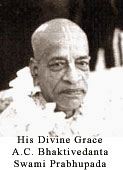
Bhaktivedanta." Is there any translation, Bhaktivedanta Swami? Proper
noun is never translated. That everyone knows. But the meaning can be
translated. So we have got translation of the meaning, what is this
Hare Krishna mantra means. But so far chanting is concerned,
that if I call you, you are American boy, Mr. John, so I'll have to
call you Mr. John. I cannot translate into Sanskrit and call you. Yes?
Student (8): How important is
your diet?
Prabhupada: Oh, that is a
very important thing. If you read Dr. George Bernard Shaw's book, You
Are What You Eat, you see. So if you eat like human being, then
you can increase your qualities of human being. If you eat like cats
and dogs, you increase the quality of cats and dogs. That's all. So we
must have discrimination what to eat. That is there in the human world.
Eating is there, but everything eatable. Even stool is eatable by a
certain kind of animal, but that does not mean that stool has to be
eaten by human being. Human being must have discretion what kind of
food will be just suitable for my health, for my intelligence, for my
brain. So these things are prescribed. If we eat things which are in
goodness... They are prescribed in the Vedic literature that wheat,
rice, sugar, milk product, vegetables, fruits, these things are in
goodness. So if you want to increase your quality of goodness, that is
required for God realization. Unless you are situated in the quality of
goodness, you cannot be promoted to the higher platform. So your eating
should be arranged within this group: rice, wheat, sugar, milk product,
vegetables, and fruits. In your country you have got enough nice
grains, nice fruits, enough supply of milk, butter. So there is no
question of accepting any other food. You can accept foodstuff within
this group and become healthy and good brain, good conscience. You can
engage yourself in God consciousness. That is possible. So therefore
"Discrimination is the best part of valor." We should discriminate what
kind of food we should eat. We cannot eat anything and everything. That
discrimination must be there. Yes?
Student (8): Would it not be
better if intellectual [indistinct] and would it not be better for them
to leave the father and devote their status, instead, to the Lord?[?]
Prabhupada: Of course, in the
beginning I said that there is no question of changing your position.
In whatever position you are, either you are a student or a lawyer or
something else, you can chant Hare Krishna and realize yourself. We
don't recommend that you change your position. That is not our
recommendation. But if you can [be] fully devoted in Krishna
consciousness, that is very nice. But don't do it whimsically. There
will be a mature platform when you can do that. Just like I was a
family man, I was living with my family. I have got my wife, sons,
daughters, grandchildren. So in this old age I left them. So I'm not in
difficulty although I am alone. I came in your country alone. That's a
long history. So that dependence on God, when you actually develop,
then you can give up everything, depend only on God. But don't do it by
whimsically. No. That will not do. You stay in your position, realize
yourself, then time will come when God will dictate you, "You can
do..., become free from all obligation." So please join with us in the kirtan.
Modern Education Missing the Aim of Life/ WORLD SANKIRTAN PARTY ©2004 - Hansadutta das
Home | About | Events | World Sankirtan Party | Inside Nam Hatta
eBooks | Site Map | Store